Counselling for Anxiety: A Complete Guide to Treatment
Table of Contents
What Is Counselling for Anxiety?
How Counselling Helps With Anxiety Symptoms
Types of Therapy for Anxiety: Finding the Right Approach
Cognitive Behavioral Therapy (CBT)
Dialectical Behavior Therapy (DBT) and Acceptance and Commitment Therapy (ACT)
How Long Does Anxiety Counselling Take?
Finding a Therapist: Steps to Get Started
Questions to Ask an Anxiety Therapist
What to Expect in Your First Counselling Session
Counselling for Anxiety: Digital vs. In-Person Options
Last Updated: July 14, 2026
What Is Counselling for Anxiety?
Counselling for anxiety is a professional therapeutic process where trained counsellors help individuals understand, manage, and overcome anxiety symptoms through structured conversations and evidence-based techniques. Anxiety manifests differently for each person, some experience racing thoughts, others feel physical tension, and many struggle with both. Research shows that talk therapy produces measurable improvements in symptom management and quality of life when matched with the right approach and therapist.
Key Takeaway Counselling for anxiety is not about eliminating worry entirely, it's about building practical coping strategies so anxiety doesn't control your decisions, relationships, or daily life.
How Counselling Helps With Anxiety Symptoms
The therapeutic process works by addressing both the thoughts and behaviors that fuel anxiety. When you experience anxiety, your mind often gets stuck in a loop: you anticipate danger, your body responds with stress signals, and this physical reaction reinforces your belief that something is wrong. A counsellor helps you interrupt this cycle through targeted intervention.
Talk therapy creates space to examine your anxiety patterns without judgment. Many people find that simply naming their triggers, the situations, thoughts, or physical sensations that spark anxiety, gives them a starting point for change. Your counsellor helps you identify which thoughts are helpful and which ones amplify your worry. This isn't about positive thinking; it's about realistic thinking. If you're afraid of public speaking, your counsellor won't tell you "don't worry." Instead, you'll develop concrete strategies: breathing techniques, mental preparation scripts, exposure practice, and ways to manage the physical symptoms that accompany anxiety.
Counselling also addresses the avoidance patterns that maintain anxiety. When you avoid situations that make you anxious, your anxiety grows stronger because you never learn that you can handle it. A skilled counsellor guides you through gradual exposure, facing feared situations in manageable steps, so you rebuild confidence in your ability to cope.
Pro Tip The most effective anxiety counselling combines three elements: understanding your triggers, learning specific coping techniques, and practicing those techniques in real situations. All three matter.
Types of Therapy for Anxiety: Finding the Right Approach
Different therapeutic approaches work better for different people and different types of anxiety. Your counsellor might draw from one primary method or combine techniques from several approaches depending on your specific presentation.
Cognitive Behavioral Therapy (CBT)
Cognitive Behavioral Therapy is the most extensively researched and widely recommended approach for anxiety disorders. CBT operates on a straightforward principle: your thoughts, feelings, and behaviors are interconnected, and changing one changes the others. When you modify the thought patterns that fuel anxiety, your emotional response shifts, and you're more likely to engage in activities that reinforce wellbeing.
In CBT for anxiety, you'll work with your counsellor to identify automatic negative thoughts, the immediate mental reactions that pop up when you encounter something anxiety-provoking. For someone with social anxiety, this might be "Everyone will judge me" or "I'll say something stupid." Your counsellor helps you examine the evidence for and against these thoughts, then develop more balanced alternatives. You're not forcing positivity; you're replacing distorted thinking with realistic assessment.
CBT also emphasizes behavioral change through exposure exercises, gradually facing situations you've been avoiding. If you have panic disorder, this might mean practicing breathing techniques, then sitting with physical sensations without trying to escape them.
Best For CBT works exceptionally well for specific anxiety disorders like panic disorder, social anxiety, and generalized anxiety disorder. It's structured, time-limited (typically 12-20 sessions), and you can apply techniques independently between sessions.
Dialectical Behavior Therapy (DBT) and Acceptance and Commitment Therapy (ACT)
Dialectical Behavior Therapy teaches four main skill sets: mindfulness, distress tolerance, emotion regulation, and interpersonal effectiveness. You learn to observe anxious thoughts without judgment and build relationships that provide support rather than fuel anxiety.
Acceptance and Commitment Therapy takes a different angle. Rather than trying to eliminate anxious thoughts, ACT teaches you to change your relationship with them. You learn to notice anxiety without fighting it, then choose actions aligned with your values regardless of whether anxiety is present. Over time, anxiety loses its power to control your choices.
Both DBT and ACT work well for people who've tried traditional CBT without sufficient improvement, or for those whose anxiety is deeply connected to avoidance of difficult emotions.
How Long Does Anxiety Counselling Take?
The duration of counselling for anxiety varies based on the severity of your symptoms, the type of anxiety disorder, and how quickly you engage with the therapeutic process. Some people see significant improvement in 8-12 sessions; others benefit from longer-term support over 6-12 months or more.
Cognitive Behavioral Therapy tends to be the most time-efficient approach, typically lasting 12-20 sessions. Panic disorder and specific phobias often respond faster than generalized anxiety disorder or social anxiety, which may require 16-24 sessions. The first few sessions focus on assessment and building your understanding of anxiety patterns. The middle phase involves active skill-building and behavioral practice. The final sessions consolidate your progress and prepare you to manage anxiety independently.
Long-term counselling, extending beyond 6 months, works better for some people, particularly those with chronic anxiety, complex trauma, or multiple co-occurring conditions. Rather than a fixed endpoint, these arrangements often shift into maintenance mode: regular check-ins every 2-4 weeks to prevent relapse.
Anxiety Type | Typical Duration | Session Frequency | Key Focus |
Panic Disorder | 10-16 sessions | Weekly | Exposure and breathing techniques |
Social Anxiety | 14-20 sessions | Weekly | Gradual social exposure and thought challenging |
Generalized Anxiety | 16-24 sessions | Weekly | Worry management and acceptance skills |
Specific Phobia | 4-8 sessions | Weekly | Rapid exposure therapy |
Chronic/Complex Anxiety | 6+ months | Weekly then bi-weekly | Skill consolidation and relapse prevention |
The pace depends on your engagement. If you practice techniques between sessions and actively engage with behavioral assignments, progress accelerates.
Watch Out Avoid counsellors who promise quick fixes or claim they can "cure" anxiety in a few sessions. Anxiety counselling is a collaborative process that requires your active participation.
Finding a Therapist: Steps to Get Started
The first step is recognizing that you want support. Many people delay seeking counselling for anxiety because they're unsure what to expect, worried about cost, or uncertain whether therapy will actually help.
Start by clarifying what you're looking for. Are you seeking short-term support for a specific anxiety trigger, or do you want longer-term help managing chronic anxiety? Do you prefer face-to-face sessions or digital options? Having these preferences helps you narrow your search.
Next, identify counsellors in your area or online platforms that match your criteria. Ask your doctor for referrals, search your insurance provider's directory, or use online therapist-finder tools. When you've identified 2-3 potential counsellors, reach out to them directly. Most offer brief phone consultations, often free, where you can ask questions and get a sense of their approach and availability.

During this initial conversation, pay attention to how the counsellor responds. Do they listen carefully and ask clarifying questions? Do they seem genuinely interested in understanding your situation? Trust your instincts. The therapeutic relationship is one of the strongest predictors of whether counselling for anxiety will succeed.
Ask about their experience with your specific type of anxiety and their training and credentials. In most regions, legitimate counsellors hold recognized qualifications and are registered with professional bodies. Finally, discuss practical logistics: session frequency, cost, cancellation policies, and how they handle emergencies.
Questions to Ask an Anxiety Therapist
Before committing to counselling for anxiety, you should feel confident in your choice. Ask about their specific experience with your type of anxiety and what a typical session looks like. Ask what they'll expect you to do between sessions. This reveals whether they're active and collaborative.
Inquire about their training and credentials. "What qualifications do you hold?" and "Are you registered with [relevant professional body]?" Legitimate credentials matter. Ask how they measure progress. "How will we know if counselling for anxiety is working?" Good counsellors track symptoms systematically, not just subjectively.
Ask about their approach to medication. "Do you work with psychiatrists or doctors?" Some anxiety responds better to combined treatment, therapy plus medication, while other presentations respond well to therapy alone. Finally, ask what happens if the fit doesn't feel right. A confident counsellor welcomes this question and understands that therapeutic alliance matters.
What to Expect in Your First Counselling Session
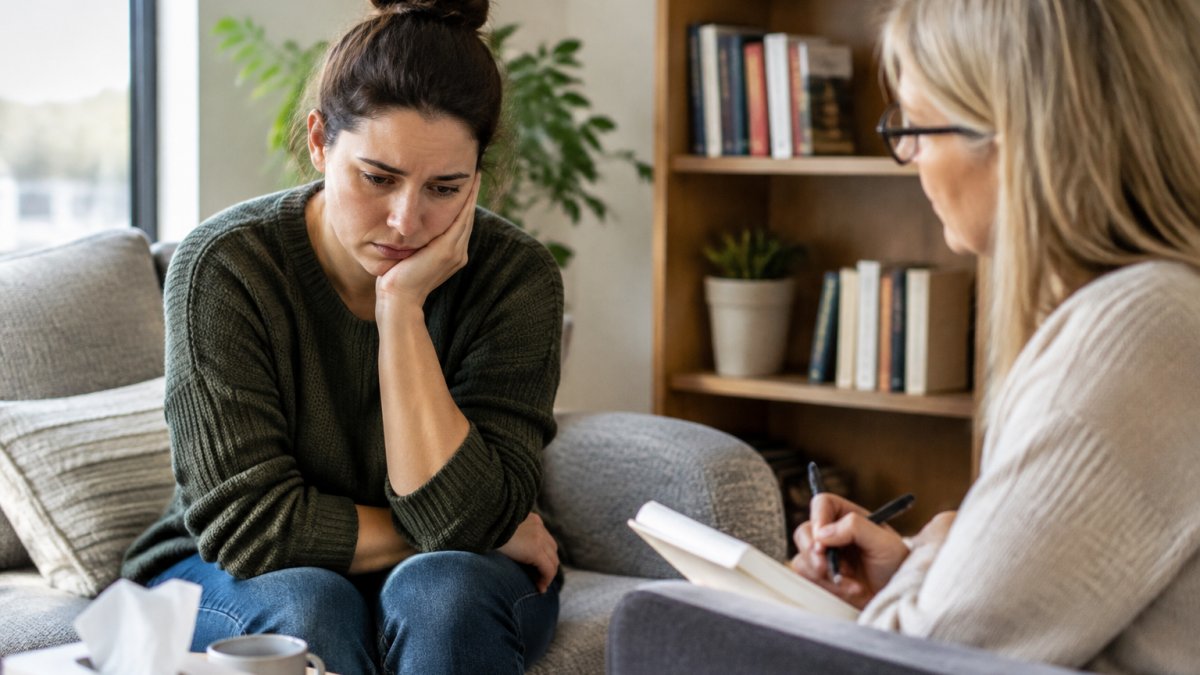
Your first session is primarily an assessment. The counsellor will ask detailed questions about your anxiety: when it started, what situations trigger it, how it affects your daily life, your medical history, and whether you've tried any treatments before.
Expect to spend time discussing your goals. "What would you like to be different?" Specific goals guide treatment. Your counsellor will explain their approach and ask if it resonates with you. They might introduce basic concepts about how anxiety works in your body and mind. They might assign a first task: keeping an anxiety diary, trying a breathing exercise, or simply noticing when anxiety appears and what triggers it.
Most importantly, a good first session establishes safety and collaboration. You should leave feeling heard, not judged, and with a clear understanding of next steps. Many counsellors also focus on Healthy Communication skills during early sessions, helping you express your needs and concerns more clearly, a foundation that supports all therapeutic work.
Pro Tip Bring a notebook to your first session and jot down key points. Also, don't hesitate to ask the counsellor to clarify anything you don't understand.
Counselling for Anxiety: Digital vs. In-Person Options
The rise of digital therapy has expanded access to counselling for anxiety significantly. Both formats have genuine advantages, and the best choice depends on your preferences, circumstances, and anxiety presentation.
In-person counselling offers presence and embodied connection. Your counsellor can observe your body language and respond in real-time. For some people with anxiety, being in a calm, dedicated therapeutic space, separate from home distractions, creates the right conditions for deep work. For those with panic attacks, some counsellors prefer in-person sessions so they can guide you through grounding techniques directly.
Digital counselling through video calls or phone sessions offers flexibility and accessibility. You can attend sessions from home, eliminating travel time and the anxiety that sometimes accompanies going to an unfamiliar office. For people with agoraphobia or severe social anxiety, digital options can be the bridge that makes counselling possible at all. Digital sessions also often cost less and have fewer scheduling constraints.
Research shows that digital counselling for anxiety produces outcomes comparable to in-person therapy when delivered by qualified practitioners. The therapeutic relationship, not the medium, is the primary factor in success. A practical approach: start with whichever format feels less anxiety-provoking. Many counsellors offer both options, so you can experiment and see what works best for you.
Best For Digital counselling for anxiety works exceptionally well for people with agoraphobia, social anxiety, or limited mobility. It also suits those with unpredictable schedules or those living in areas with few local counsellors.
Anxiety often convinces you that seeking help is unnecessary or that you should handle it alone. That belief is part of the anxiety itself. The truth is that counselling for anxiety, combined with your own effort and commitment, produces real change. At Rod Chant Counselling, we've spent 25 years helping people move from anxiety-driven avoidance to confident engagement with life. When you're ready to take the next step, book a session online and begin your journey toward a calmer, more balanced life.
Frequently Asked Questions
How does counselling help with anxiety?
Counselling for anxiety works by helping you identify triggers, understand negative thought patterns, and develop evidence-based coping strategies. Through therapeutic techniques like cognitive behavioral therapy, a mental health professional guides you to challenge unhelpful thoughts and build emotional regulation skills. This collaborative process reduces symptom severity and improves your overall quality of life by teaching practical tools you can use daily.
How long does anxiety counselling typically take to show results?
Results vary based on anxiety severity and your engagement. Some people notice improvements in 4-6 weeks, while others benefit from longer-term treatment lasting several months. Your therapist will develop a personalized treatment plan during your first sessions. Short-term counselling (8-12 sessions) can help with specific triggers, while ongoing therapy addresses deeper patterns and builds lasting coping strategies.
What types of therapy for anxiety are most effective?
Cognitive Behavioral Therapy (CBT) is the most evidence-based approach, focusing on negative thought patterns and behavioral modification. Dialectical Behavior Therapy (DBT) and Acceptance and Commitment Therapy (ACT) are also highly effective, particularly for generalized anxiety and panic attacks. Your therapist will recommend the best approach based on your clinical diagnosis and specific anxiety disorder, ensuring a patient-centered treatment plan tailored to your needs.
What questions should I ask an anxiety therapist during our first meeting?
Ask about their experience treating anxiety disorders, their preferred therapeutic approach (CBT, DBT, ACT), and how they measure progress. Inquire about session frequency, estimated treatment duration, and how they handle emergencies. Also discuss the therapeutic alliance, whether you feel heard and supported, as this relationship is crucial for healing. Don't hesitate to ask about their approach to self-advocacy and how they involve you in creating your treatment plan.

Comments