How to Manage Anxiety at Home: 7 Practical Strategies
Table of Contents
Understanding Anxiety and Why Home-Based Management Matters
Breathing and Grounding Techniques for Immediate Relief
Diaphragmatic Breathing
Grounding Techniques for Panic Attacks
Lifestyle Changes for Anxiety Management
Physical Activity and Exercise
Sleep Hygiene and Nighttime Anxiety Protocols
Diet, Caffeine, and Alcohol
Cognitive Behavioral Therapy Techniques You Can Use at Home
Managing Your Digital Environment and Home Workspace
When to See a Therapist for Anxiety
Building a Sustainable Anxiety Management Routine at Home
Frequently Asked Questions
Last Updated: September 22, 2026
Understanding Anxiety and Why Home-Based Management Matters
Anxiety is a natural response your body has when facing stress or uncertainty. But when it starts affecting your daily life, your sleep, your work, your relationships, it's time to take action. The good news is that many effective strategies for managing anxiety at home don't require a therapist's office or medication. Many individuals have learned to manage anxiety at home through practical, evidence-based techniques they can use whenever they need relief.
Home-based anxiety management works because it puts control back in your hands. You're not waiting for an appointment. You're not dependent on someone else. You're learning skills you can use right now, in the moment when anxiety strikes.
The strategies in this guide address the core drivers of anxiety: your breathing, your thoughts, your body, and your environment. Each one is designed to be simple enough to use during a panic attack, yet powerful enough to create lasting change when practiced regularly.
Key Takeaway Managing anxiety at home means using immediate relief techniques combined with lifestyle changes that reduce anxiety triggers over time.
Breathing and Grounding Techniques for Immediate Relief
When anxiety hits, your nervous system goes into overdrive. Your breathing becomes shallow. Your heart races. Your mind spirals. The fastest way to interrupt this cycle is through your breath, because breathing is one of the few things you can control both consciously and automatically.
Diaphragmatic Breathing
Diaphragmatic breathing is slow, deep breathing that engages your diaphragm instead of your chest. It signals to your nervous system that you're safe, which calms your body's stress response.
Here's how to do it:
Sit or lie down in a comfortable position
Place one hand on your chest and one on your belly
Breathe in slowly through your nose for a count of 4, letting your belly expand (not your chest)
Hold for a count of 4
Exhale slowly through your mouth for a count of 4
Pause for a count of 4
Repeat 5-10 times
The key is making your exhale as long as or longer than your inhale. A longer exhale activates your parasympathetic nervous system, which is your body's natural brake on stress. This technique can help calm your body's stress response.
A common mistake is trying to breathe too deeply too fast. Slow and steady wins. If counting feels awkward, just focus on making each breath smooth and even.

Grounding Techniques for Panic Attacks
When panic hits, your mind feels disconnected from reality. Grounding techniques anchor you to the present moment by engaging your senses. They work because anxiety lives in the future, in what-ifs and worst-case scenarios, while your senses live in the present.
The 5-4-3-2-1 grounding method is one of the most effective:
Name 5 things you can see
Name 4 things you can touch
Name 3 things you can hear
Name 2 things you can smell
Name 1 thing you can taste
This technique helps pull your attention away from anxious thoughts, encouraging focus on your immediate surroundings.
Another quick option: hold an ice cube or splash cold water on your face. The physical sensation interrupts the panic response and brings you back to the present moment immediately.
Pro Tip Keep a grounding anchor nearby, a textured object, a specific scent, or a piece of ice in your freezer. When panic starts, use it immediately. Grounding yourself can help manage anxiety.
Lifestyle Changes for Anxiety Management
Immediate relief techniques work in the moment, but they're not enough on their own. Real change comes from lifestyle modifications that reduce how often anxiety shows up in the first place. Think of this as building resilience, making your nervous system less reactive overall.
Physical Activity and Exercise
Exercise is one of the most underrated anxiety management tools. When you move your body, you're literally burning off the stress hormones your body produces during anxiety. You're also triggering the release of endorphins, which improve mood naturally.
You don't need intense workouts. Regular physical activity, such as a 20-30 minute walk most days of the week, can be beneficial. Some people find that activities like yoga, swimming, or cycling work better because they demand enough focus to pull your mind away from anxious thoughts.
The best exercise is the one you'll actually do consistently. If you hate running, don't force it. If you love dancing, dance. The consistency matters more than the intensity.
Sleep Hygiene and Nighttime Anxiety Protocols
Anxiety and poor sleep feed each other. Anxiety keeps you awake. Poor sleep makes anxiety worse the next day. Breaking this cycle means treating sleep seriously.
Start with the basics:
Keep your bedroom cool, dark, and quiet
Go to bed and wake up at the same time every day, even weekends
Avoid screens 30-60 minutes before bed (the blue light disrupts melatonin)
Avoid caffeine after 2 p.m.
Limit alcohol, it disrupts sleep quality even if it helps you fall asleep
For nighttime anxiety specifically, try this: if you're lying awake with racing thoughts, don't fight it. Get up, go to another room, and do something calm and boring until you feel sleepy. Your brain needs to learn that bed is for sleep, not for worrying.
Some people find that a "worry window" helps, set aside 15 minutes earlier in the day to write down worries, then consciously set them aside for the rest of the day. This trains your mind not to ruminate at night.
Diet, Caffeine, and Alcohol
What you consume directly affects your anxiety levels. Caffeine is a stimulant that mimics anxiety symptoms. If you're prone to anxiety, even small amounts can trigger it.
Alcohol is trickier.
Watch Out If you're using alcohol to manage anxiety regularly, this is a sign you need professional support. Alcohol can mask anxiety temporarily but creates dependence and worsens the underlying problem.
Cognitive Behavioral Therapy Techniques You Can Use at Home
Thought challenging: When you notice an anxious thought, ask yourself: Is this thought true? What evidence do I have for it? What evidence do I have against it? What would I tell a friend who had this thought? This creates distance between you and the thought, so you're not automatically believing it.
Managing Your Digital Environment and Home Workspace
Anxiety thrives in chaos. Your physical environment directly affects your mental state. A cluttered, chaotic home amplifies anxiety. A calm, organized space reduces it.
Start with your bedroom and main living areas:
Remove clutter that creates visual stress
Use soft, warm lighting instead of harsh overhead lights
Add plants or natural elements
Keep your workspace organized and minimal
Turn off non-essential notifications
Limit social media to specific times
Avoid news and email first thing in the morning and before bed
Use apps that block distracting websites during work hours
Pro Tip Create a "calm corner" in your home, a specific spot with comfortable seating, soft lighting, and minimal distractions. Use this space exclusively for relaxation and anxiety management techniques. Your brain will start associating this space with calm.
When to See a Therapist for Anxiety
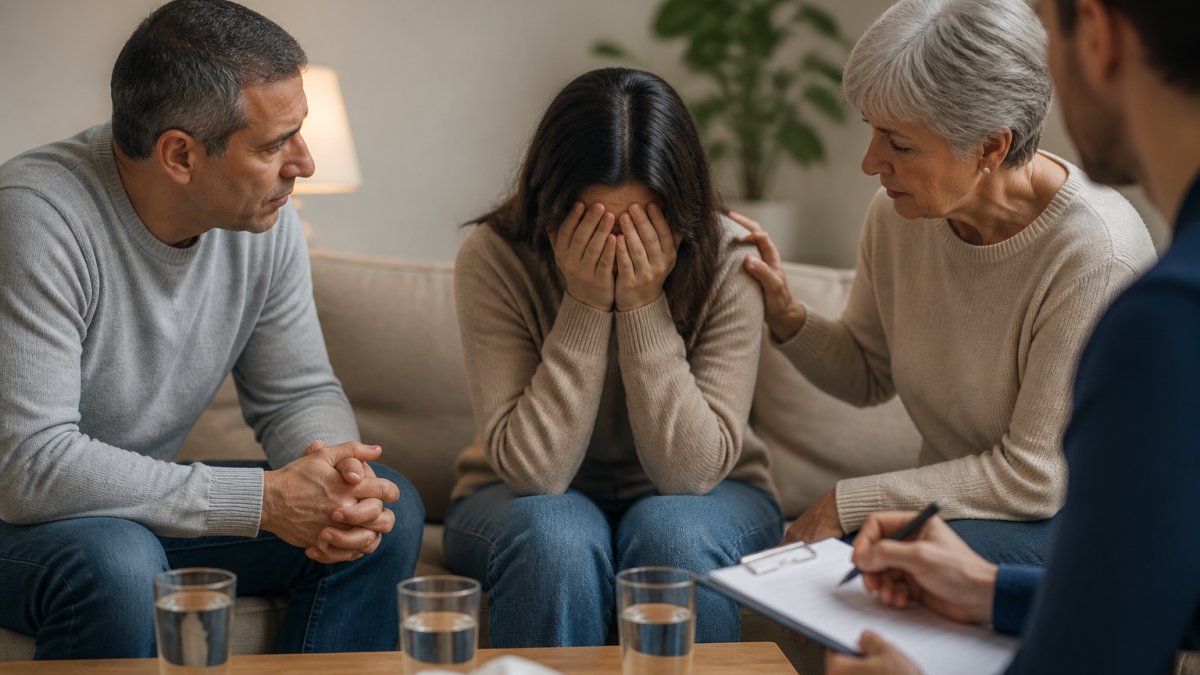
Home-based strategies are powerful, but they have limits. Some anxiety requires professional support. Here's when to reach out to a therapist:
Your anxiety is affecting your ability to work, study, or maintain relationships
You're having panic attacks regularly (more than once a week)
You're avoiding situations so much that your life is becoming smaller
You've tried self-help strategies consistently for 4-6 weeks with no improvement
You're using alcohol, drugs, or other unhealthy coping mechanisms to manage anxiety
You're having thoughts of harming yourself
Your anxiety started after a traumatic event
Building a Sustainable Anxiety Management Routine at Home
The goal is to build a routine where anxiety doesn't control your life.
Your routine might look like this:
Morning: 5 minutes of diaphragmatic breathing
Midday: a 20-minute walk
Evening: 15 minutes of worry time, then 30 minutes screen-free before bed
As needed: grounding techniques when anxiety spikes
Key Takeaway Building a sustainable routine means starting small, practicing consistently, and adjusting based on what actually works for you, not what should work in theory.
Frequently Asked Questions
What are the most effective grounding techniques for panic attacks?
Grounding techniques anchor you to the present moment during panic. The 5-4-3-2-1 sensory technique works by identifying five things you see, four you can touch, three you hear, two you smell, and one you taste. Progressive muscle relaxation, where you tense and release muscle groups, also reduces physical panic symptoms. Box breathing (inhale for 4 counts, hold for 4, exhale for 4, hold for 4) activates your parasympathetic nervous system. Practice these techniques regularly at home so they become automatic during anxiety spikes.
When should I see a therapist for anxiety instead of managing it alone?
Consider professional support if anxiety interferes with daily functioning, persists despite self-help efforts, triggers panic attacks, or affects relationships and work. A therapist can identify anxiety triggers, teach cognitive behavioral therapy techniques tailored to your situation, and rule out underlying health issues. If you're experiencing racing thoughts, difficulty sleeping, or constant worry that home-based strategies don't relieve, professional intervention becomes important. Rod Chant Counselling offers telehealth options for those unable to attend in person.
What lifestyle changes help reduce chronic anxiety?
Regular physical activity reduces anxiety by lowering cortisol and releasing endorphins. Consistent sleep schedules regulate your nervous system, while limiting caffeine and alcohol prevents anxiety triggers. Mindfulness practices, even 10 minutes daily, build present-moment awareness and reduce worry patterns. Creating an anxiety-friendly home workspace, minimizing digital notifications and organizing your physical space, reduces environmental stress. These lifestyle modifications work best when combined and practiced consistently over weeks, not days.
How can I calm my nervous system at home right now?
Diaphragmatic breathing is your fastest tool: breathe in through your nose for 4 counts, hold for 4, exhale for 6. This activates your vagus nerve and signals safety to your nervous system. Progressive muscle relaxation or guided imagery can follow. If anxiety is severe, step outside for fresh air, splash cold water on your face, or move your body. These somatic techniques interrupt the anxiety cycle. For ongoing nervous system regulation, daily practices like yoga, meditation, or even a 20-minute walk build resilience over time.
Book Online

Comments